Table of Contents[Hide]
- 1. Understanding the trench coat: History meets modern engineering
- 2. The perfect fit: How to wear a trench coat for men of every build
- 3. Single breasted vs. double breasted: Making the right choice
- 4. Color guide: Choosing your perfect shade
- 5. Styling formula: How to wear trench coat for men across every occasion
- 6. The 2026 mix-and-match matrix: Creative outfit formulas
- 7. Fabric selection: From gabardine to technical blends
- 8. Accessory orchestration: The complete look
- 9. The Dunnio Tailor advantage: Custom perfection in 21 days
- 10. Care and maintenance: Protecting your investment
- 11. Frequently asked questions about how to wear a trench coat for men
- Conclusion
The trench coat has journeyed from the muddy battlefields of World War I to become one of the most sophisticated pieces in modern menswear. In 2026, this iconic garment represents the perfect marriage of heritage craftsmanship and contemporary innovation. Whether you are a business professional navigating unpredictable weather, a groom seeking timeless elegance, or a style-conscious gentleman exploring the latest fashion trends, mastering how to wear a trench coat for men is essential. This comprehensive guide reveals the fit secrets, styling formulas, and body-type strategies that transform a simple raincoat into your signature piece. From understanding the technical engineering that makes it weather-resistant to navigating the new wave of sustainable luxury fabrics, you will discover everything you need to wear this investment piece with confidence and distinction.
1. Understanding the trench coat: History meets modern engineering
The trench coat is not just another jacket. It is a masterpiece of functional design that has remained largely unchanged for over a century, precisely because every detail serves a purpose.
1.1 What makes a trench coat authentic
Several components distinguish a genuine trench coat from an ordinary raincoat:
- Epaulets (shoulder tabs): Originally designed to secure rank insignia and map cases for military officers, these tabbed straps now add structural definition to your shoulders, creating the desirable V-shaped silhouette that makes you look broader and more commanding.
- Gun flap (storm flap): Despite the common misconception, this was not designed to cushion a rifle but to channel rainwater away from the button closure. Rain running down your shoulders will drip off this flap rather than seeping through the fastenings when you raise your arms.
- D-ring belt: Historically used to attach equipment like grenades and swords, today it serves as the crucial tool for cinching your waist and defining your proportions. Never skip the belt.
- Raglan sleeves: These angled sleeves, extending from the collar rather than the shoulder seam, provide the range of motion needed to comfortably layer over a suit jacket without restriction.
- Back vent: This split at the rear hem was essential for running and movement in combat. Today, it ensures the coat drapes cleanly when walking and doesn't bunch when seated.

1.2 2026 Trend: Technical heritage revolution
The biggest development in trench coat design this year is what industry insiders call "technical heritage" – traditional silhouettes reimagined with cutting-edge materials and sustainable practices.
Modern technical fabrics now offer waterproof ratings up to 10,000mm, meaning they can withstand heavy downpours that would have soaked through classic gabardine. These fabrics incorporate taped seams, breathability membranes, and eco-friendly water repellent coatings that do not rely on harmful chemicals.

At the same time, sustainability has become non-negotiable. Leading bespoke tailors now source organic cotton gabardine, recycled wool blends, and plant-based waterproofing treatments. For the conscious consumer, your trench coat choice in 2026 makes a statement not just about style, but about values.
2. The perfect fit: How to wear a trench coat for men of every build
Fit is where most men fail with the trench coat. An ill-fitting coat undermines the entire purpose of wearing one, making you look either swamped in fabric or uncomfortably restricted.
2.1 Universal fit rules
Regardless of your body type, these principles apply to everyone:
- The shoulder rule: The coat's shoulder seam should sit 0.5 to 1 inch past your natural shoulder. This extra room is essential if you plan to layer it over a suit jacket. Those shoulders need space for the suit padding underneath without creating bunching or tightness.
- The fist test: Button the coat fully and place a closed fist between the fabric and your chest. You should have just enough room for that fist – no more, no less. Too tight restricts movement; too loose looks sloppy.
- Sleeve length: Your sleeves should extend 2 to 4 inches past your suit jacket cuff, ideally falling to the base of your thumb. This ensures any shirt or jacket sleeves beneath remain completely hidden and protected.
- Height-based length: Tall men (over 6 feet) should choose coats that fall to mid-calf or just below the knee to maintain proportions. Shorter men (under 5 foot 9) should opt for styles ending at mid-thigh or just above the knee to avoid overwhelming their frame.

2.2 How to wear trench coat for fat men
If you carry extra weight, the trench coat can be incredibly flattering when styled correctly:
- Choose single breasted: Double breasted styles add visual bulk across the chest and stomach. A single row of buttons creates a cleaner vertical line that is inherently slimming.
- Prioritize structured shoulders: Strong, well-defined shoulders draw the eye upward and create the illusion of a V-taper, even if your natural shape is straighter. Look for coats with padded or reinforced shoulder construction.
- Belt below the natural waist: Position your D-ring belt slightly lower than where your waist naturally sits. This creates a longer torso line rather than emphasizing the widest point of your midsection.
- Stick to darker colors: Navy, charcoal, and black minimize visual bulk far more effectively than camel or lighter tones.
2.3 How to wear trench coat for big-bellied men
For men carrying most of their weight in the stomach area, specific strategies help:
- Never button all buttons: Leave the coat open or button only the top button. A fully buttoned coat will pull and gap across your midsection, creating an unflattering silhouette.
- Go longer: Choose a style that falls to knee-length or slightly below. This extended length balances the proportions created by a fuller midsection.
- Dark, solid colors: Just like with overall weight concerns, darker tones recede visually. Avoid patterns or light colors that draw attention to the stomach.
- Strategic layering underneath: Wear slim-fitting base layers. A blouson shirt or bulky sweater under your trench will only compound the problem. Thin merino wool or fitted dress shirts are your friends.

2.4 How to wear trench coat for tall slim men
Lean builds require the opposite approach to create presence and dimension:
- Double breasted is your best friend: The extra fabric across the chest adds visual weight and makes you appear broader and more substantial.
- Avoid cropped lengths: Modern cropped trench coats will make your legs look disproportionately long. Stick to traditional knee-length or longer styles.
- Layer for dimension: Use the roomy fit to your advantage by layering chunky knit sweaters, thick scarves, or even vests underneath. This builds out your silhouette.
- Consider lighter colors: Camel, stone, and light grey add visual mass that darker colors would minimize.

3. Single breasted vs. double breasted: Making the right choice
The choice between single and double breasted is not just aesthetic – it fundamentally changes how the coat functions and flatters.
3.1 Single breasted advantages
- Sleeker silhouette: The simple button closure creates a clean, uninterrupted line from collar to hem. This is ideal for bigger builds, business casual settings, and modern minimalist wardrobes.
- Easier casual styling: A single breasted coat transitions more naturally from formal to casual contexts. Pair it with jeans and sneakers without looking costume-like.
- More comfortable in warm weather: Less fabric layering across the chest means better ventilation on those transitional spring days.

3.2 Double breasted advantages
- Classic military heritage: This is the original trench coat style, directly descended from the WWI officer's coat designed by Burberry and Aquascutum. If you value authenticity and tradition, double breasted is non-negotiable.
- Superior weather protection: That extra layer of fabric across your chest provides genuine additional warmth and rain defense. The overlapping closure creates a tighter seal against wind.
- Formal elegance: For black tie events, weddings, and high-stakes business meetings, double breasted projects authority and polish in a way single breasted cannot match.
- Better for slim builds: If you are naturally lean, the double layer adds dimension and presence to your silhouette.
4. Color guide: Choosing your perfect shade
Your color choice should be informed by your wardrobe, your climate, and your lifestyle.
4.1 Classic camel: The versatile neutral
Camel or beige remains the gold standard for trench coats because it pairs effortlessly with nearly every suit color imaginable.
- Best for: All occasions, from weddings to weekend errands. Camel is particularly stunning against navy, charcoal, grey, and brown suits.
- 2026 trend update: Lighter variations like stone, oatmeal, and sand have overtaken the traditional tan camel, offering a fresher, more contemporary take on the classic.
- Caution: Very pale skin tones may find light camel washes them out. If this is you, opt for a richer camel with warmer undertones or consider stone grey instead.

4.2 Navy blue: Modern sophistication
Navy has surged in popularity as men move away from traditional camel toward darker, more urban aesthetics.
- Best for: Business professionals, evening events, and anyone building a modern wardrobe. Navy projects quiet confidence and pairs beautifully with grey suits and light blue dress shirts.
- Styling tip: Try monochrome navy-on-navy by matching your trench to a navy suit. Break it up with brown leather shoes and a lighter shirt to avoid looking like a uniform.
4.3 Charcoal and black: Urban authority
For the man who wants to channel "Peaky Blinders" mystique or simply prefers a darker, more serious palette, charcoal and black deliver.
- Best for: Formal evening wear, city commuting, and creative professionals. Black trench coats look particularly sharp over lighter grey or beige suits, creating sophisticated contrast.
- Note: Black can be too severe for outdoor daytime events. Reserve it for autumn/winter and evening occasions.
4.4 Grey: The unexpected new neutral
Mid-grey is the surprise color story of 2026, quietly replacing camel as the "go-with-everything" choice among style-conscious men.
- Why it works: Grey offers the versatility of camel with a more contemporary edge. It reads as both professional and approachable, formal and relaxed.
- Perfect for Australian climates: Grey trench coats handle the "four seasons in one day" Melbourne and Sydney weather with ease, looking appropriate whether the sun comes out or storm clouds roll in.
5. Styling formula: How to wear trench coat for men across every occasion
Knowing when and how to deploy your trench coat is what separates the well-dressed from the merely clothed.
5.1 Business professional formula
The trench coat is the armor of the modern professional, protecting your investment in custom tailoring while projecting competence and authority.
- The classic combination: Layer your trench over a two-piece or three-piece suit. The coat should be long enough to cover the suit jacket completely when buttoned.
- Monochrome power move: Try matching your trench color to your suit for an ultra-modern monochrome look. Break up the single color with contrasting shoes and a leather briefcase. For example, a grey trench coat with a grey suit and brown Oxford shoes creates sophisticated visual interest.
- Color-breaking strategy: If monochrome feels too bold, choose similar but not identical tones instead. A charcoal trench over a navy suit, or a camel trench over a brown suit, provides cohesion without rigidity.

Explore our custom suits to build the perfect foundation for your professional trench coat pairing. Pair with impeccably tailored custom pants from for complete coordination.
5.2 Wedding guest and formal events
Weddings demand special attention because outerwear etiquette is rarely discussed but always observed.
- Black tie rule: If you are attending a black tie wedding or gala, only navy or black trench coats are acceptable. The coat should be removed and checked upon entering the venue – wearing it during the ceremony itself is a significant faux pas.
- Winter and destination weddings: For outdoor ceremonies or warm-weather celebrations, a camel or light grey trench layered over a linen suit strikes the perfect balance between preparedness and occasion-appropriate lightness.
- Groom and groomsmen: The groom's trench should be noticeably higher quality than his groomsmen's. Consider a custom wool-gabardine version to match the sophistication of the event. Groomsmen should coordinate colors and styles to ensure visual unity in photographs.

Discover our custom wedding suits and our custom tuxedo options for your most important occasions. For winter celebrations, explore our linen wedding suits.
5.3 Smart casual and weekend wear
This is where the trench coat proves its true versatility, elevating even the most basic weekend uniform.
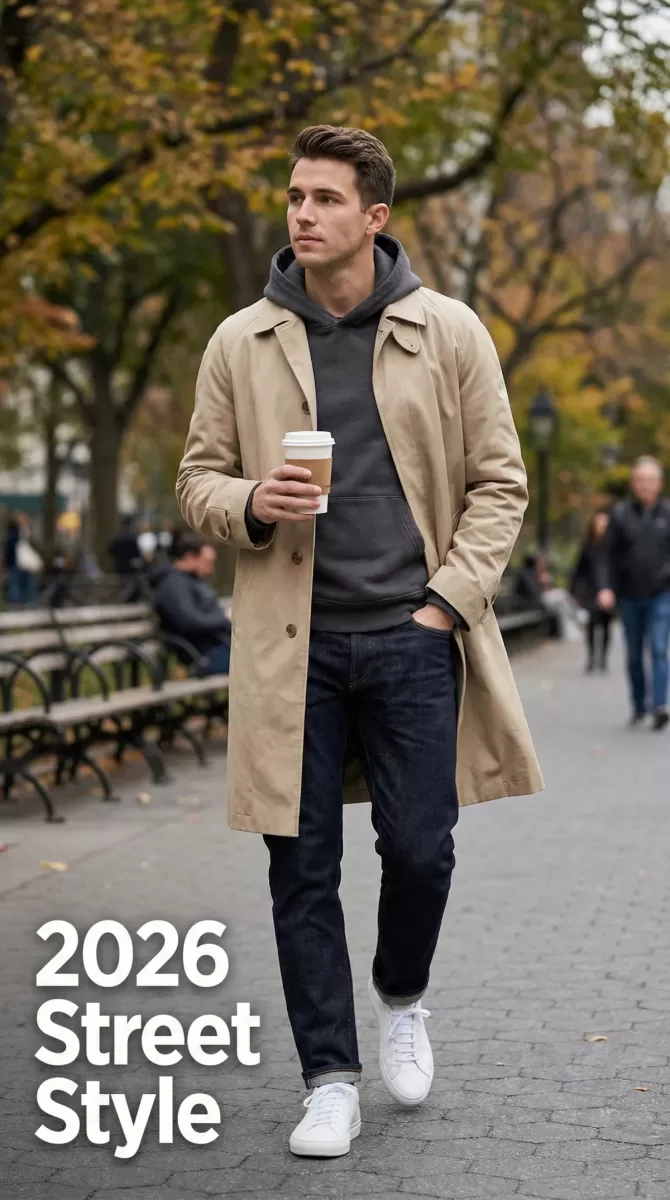
- The high-low mix: Pair your camel or grey trench with dark-wash jeans, a plain white t-shirt, and clean leather sneakers. The contrast between the formal coat and casual base creates a deliberately effortless look that reads as stylish rather than lazy.
- The hoodie layer (2026 streetwear trend): Do not be afraid to layer a quality hoodie underneath your trench. Let the hood rest over the collar of the coat for an unexpected mix of streetwear and tailoring that is very much on-trend this year.
- The cardigan warmth strategy: For cooler days, layer a chunky knit cardigan or thin fleece under your trench. This combination handles unpredictable transitional weather while maintaining a polished appearance.
5.4 Date night sophistication
When the sun goes down, channel the timeless mystique of Humphrey Bogart in "Casablanca."
- The no-tie elegance: Wear your trench over a three-piece suit with the tie removed. The waistcoat provides structured formality while the open collar keeps things approachable and romantic.
- Color psychology: Darker trench colors like navy or charcoal read as more mysterious and evening-appropriate than lighter camel tones.
Elevate your date night look with our custom 3-piece suits from for maximum impact.
5.5 Australian climate adaptation
Melbourne and Sydney residents face unique challenges with their famous "four seasons in one day" weather patterns.
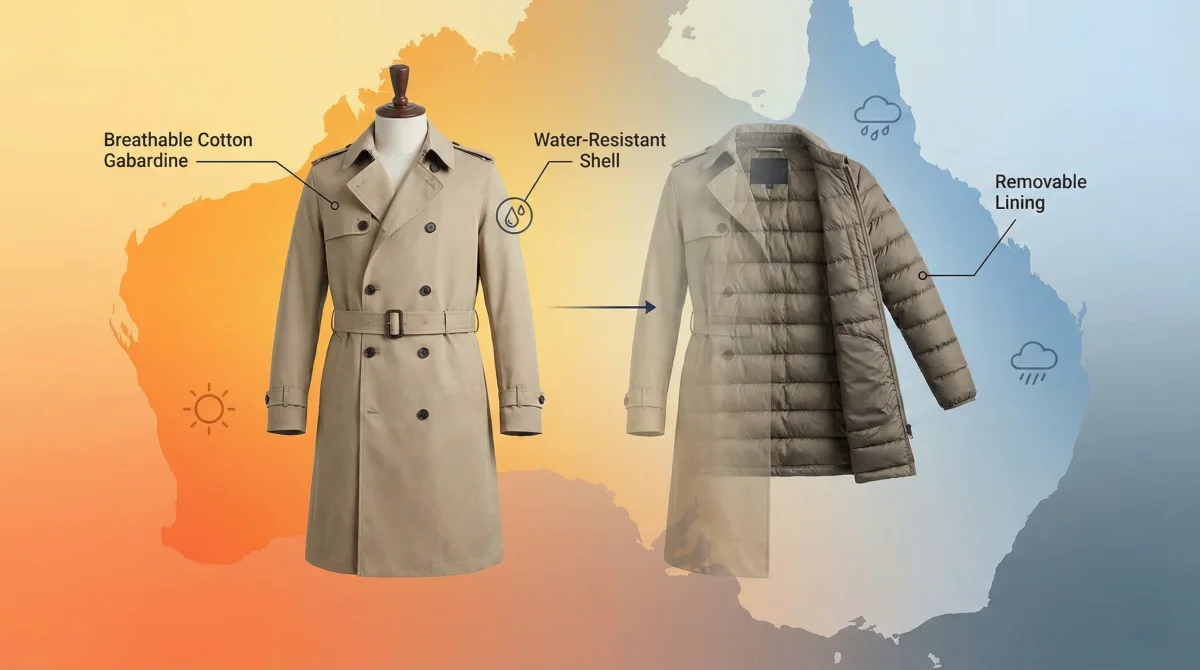
- The removable lining strategy: Choose a trench with a zip-out or button-out lining. Start your morning commute with it in, then remove it as the day warms.
- Breathable fabrics are essential: Cotton gabardine breathes far better than synthetic blends. In Australian heat, breathability prevents the dreaded "boiled alive in your coat" feeling.
- The lightweight layering approach: Rather than one heavy coat, use your trench as the outer shell and adjust layers underneath throughout the day. Start with a light sweater, stash it in a bag when the temperature rises.
6. The 2026 mix-and-match matrix: Creative outfit formulas
Move beyond the basic "trench plus suit" combination with these fashion-forward formulas.
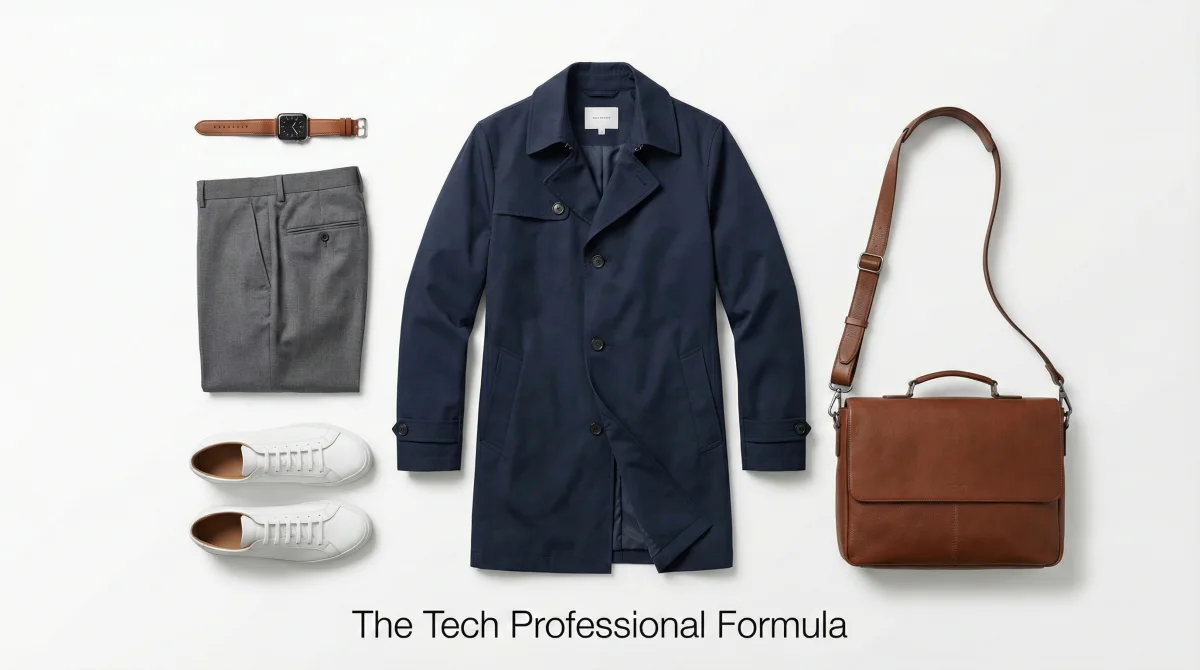
6.1 The tech professional
For the modern executive who carries a laptop and smartphone everywhere:
- Navy trench coat + mid-grey suit + brown leather tech bag + Apple Watch with leather strap + modern leather sneakers (think Common Projects or similar minimalist styles).
- Why it works: This combination respects traditional business norms while incorporating contemporary technology and comfort. The leather sneakers are the subtle rebellion that signals you are not bound by outdated formality.
6.2 The creative dandy
For the man who refuses to blend into the background:
- Oversized camel trench (intentionally one size up) + black rollneck turtleneck + tailored charcoal trousers + cognac brown Chelsea boots.
- Accessories are critical: Add a wide-brimmed fedora in grey felt and a paisley silk scarf in burgundy and gold tones. The oversized proportions of the coat create a dramatic silhouette that commands attention.

Anchor your look by craft a perfect jacket
6.3 The sustainable gentleman (2026 trend)
For the environmentally conscious dresser:
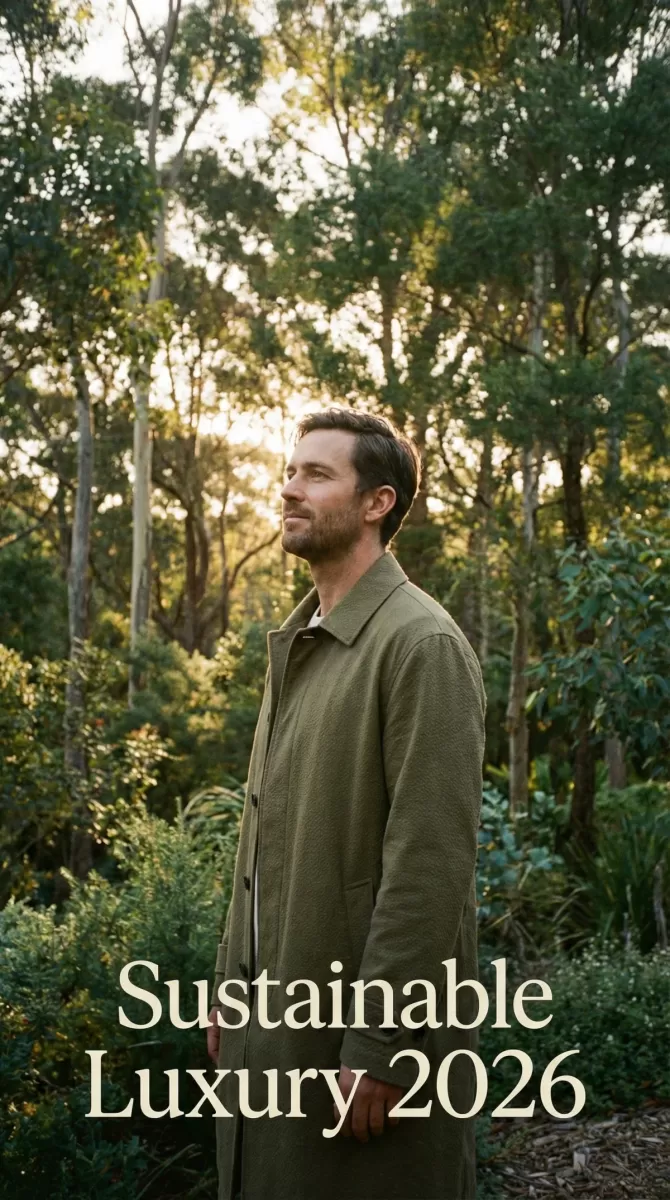
- Eco-fabric trench coat (organic cotton or recycled polyester) + organic cotton Oxford shirt + recycled wool suit + vegetable-tanned leather shoes.
- The philosophy: Every piece in this outfit aligns with sustainable and ethical production. In 2026, this is not just about looking good but doing good.
6.4 The athleisure executive
For the man who travels frequently and values comfort:
- Black trench coat + performance hoodie in charcoal or navy (moisture-wicking fabric) + tailored joggers in wool blend + premium dress sneakers.
- The versatility: This outfit works equally well for a long-haul flight, an airport lounge, and an unexpected client meeting. The trench elevates the athletic base while the hoodie keeps the formality in check.
7. Fabric selection: From gabardine to technical blends
Understanding fabric is crucial because it determines both performance and longevity.
7.1 Classic fabrics
- Cotton gabardine: This is the original trench coat fabric invented by Thomas Burberry in 1879. Individual cotton fibers are waterproofed before weaving, creating a tight, durable material that repels water while remaining breathable. This is the gold standard for traditional elegance.
- Wool gabardine: A higher-end alternative that provides the same water resistance as cotton but with added warmth. Ideal for colder climates or winter trench coats. Expect to pay a premium for quality wool gabardine.

7.2 Modern technical fabrics
- Waterproof ratings explained: Modern technical fabrics assign waterproof ratings in millimeters. A rating of 10,000mm means the fabric can withstand a 10,000mm column of water before leaking. For context, light rain requires about 5,000mm; heavy rain demands 10,000mm or higher.
- Breathability scores: Look for fabrics with breathability ratings (measured in grams of water vapor per square meter per 24 hours). Anything above 10,000g is considered highly breathable and will prevent you from overheating in your coat.
- Taped seams: Premium technical trench coats feature taped seams where all stitching is sealed with waterproof tape, preventing water from seeping through the needle holes.

7.3 Dunnio Tailor fabric options
We offer carefully curated fabric selections that balance heritage quality with modern performance:
- Premium tier ($99 to $135): Choose from Technical Twill for water resistance, Oxford weave for breathability, Chambray for casual versatility, Barathea for formal occasions, Technical Satin for sheen, Hopsack Cotton Blend for texture, Plain Cotton Blend for tradition, or Pure Linen for winter.
- Luxury mill tier ($231): Upgrade to Twill in Wool Blends for superior drape and warmth, or Wool 150s for the finest hand-feel and longevity.
- Custom requests: We can source specialty fabrics on request to meet your exact requirements.
8. Accessory orchestration: The complete look
Accessories transform a good outfit into an exceptional one.
8.1 The scarf pairing guide
- Material choice: Cashmere offers unmatched softness and warmth but can be delicate. Silk-wool blends provide durability with a luxurious feel and work beautifully in transitional seasons.
- Pattern coordination: If your trench is solid (which it should be), your scarf can incorporate pattern. Herringbone in tonal greys pairs beautifully with a charcoal trench. Paisley in burgundy and gold complements camel or navy.
- How to wear it: In moderate cold, drape the scarf under the collar of your trench so it sits against your neck. In severe cold, wrap it over the collar so it covers your lower face.

8.2 Gloves beyond basic black
- 2026 color trends: Black leather gloves are safe but boring. This year, well-dressed men are embracing burgundy, cognac brown, and petrol blue leather gloves that provide sophisticated contrast against navy or charcoal trench coats.
- Leather vs. suede: Smooth leather is more formal and weather-resistant. Suede is softer and more casual but stains easily in wet conditions.
8.3 Headwear integration
- The fedora for dandies: A classic felt fedora in grey or charcoal balances the volume of a long trench coat and completes the silhouette of an elegant gentleman. Ensure the hat brim is proportional to your shoulders – too wide looks costume-like.
- The baseball cap for casual (2026 trend): High-quality, minimalist baseball caps in solid colors (navy, black, forest green) can work with a trench coat in casual contexts. The key is premium construction; a cheap promotional cap destroys the look.
- Avoid volume clash: Never pair a large, floppy hat with a heavily padded or double breasted trench. The competing volumes will overwhelm your frame.
9. The Dunnio Tailor advantage: Custom perfection in 21 days
Off-the-rack trench coats force compromise. Custom tailoring eliminates every compromise.
9.1 Why custom fit matters for how to wear a trench coat for men
Off-the-rack manufacturers design for average bodies that do not exist. Their size "Medium" will fit some men adequately but fit no man perfectly.
- Body-type specific engineering: Our bespoke process measures your exact shoulder width, chest circumference, waist position, sleeve length, and overall height. We then construct a coat engineered specifically for your proportions, whether you are tall and slim, short and broad, or anywhere in between.
- No more compromise: Forget choosing between sleeves that are too short or a chest that is too tight. Custom means every measurement is exactly right for you.
9.2 Speed without sacrifice: 21-day production timeline
Traditional bespoke tailoring can take months. We have streamlined our production process to deliver custom garments in just 21 days without compromising on quality or craftsmanship.
How we do it: Efficient workflow systems, dedicated tailoring teams, and advanced 3D modeling technology allow us to move from measurement to finished garment faster than legacy tailors while maintaining meticulous attention to detail.
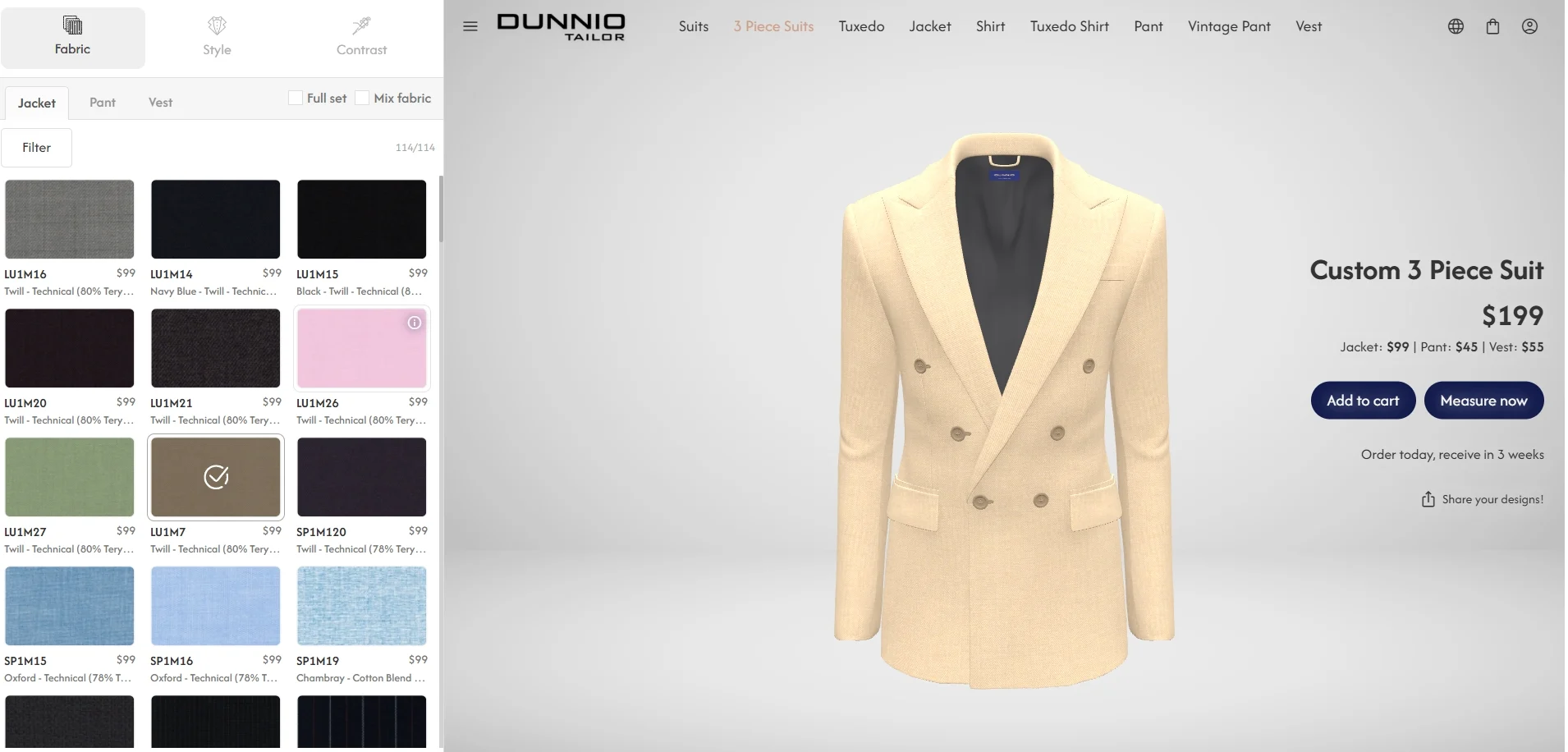
9.3 Interactive 3d design experience
Why guess what your coat will look like when you can see it before you commit?
Virtual visualization: Our 3D design tools allow you to see your trench coat from every angle as you select fabric, adjust lapel width, choose button styles, and modify length. What you see is what you get.
9.4 Australian market expertise
As tailors based in Australia, we understand the unique climate challenges you face.
- Climate-specific recommendations: We guide Melbourne and Sydney clients toward breathable cotton gabardine with removable linings rather than heavy wool that would be uncomfortable nine months of the year.
- Local wedding culture integration: Australian weddings often feature outdoor ceremonies and receptions. We design trench coats that look elegant over lighter-weight linen suits rather than only heavy wool suiting.
10. Care and maintenance: Protecting your investment
A quality trench coat should last decades if properly maintained.
10.1 Cleaning protocols
- Frequency: Clean your trench coat only when visibly soiled or at the end of each season (maximum 2-3 times per year). Over-cleaning fades colors and degrades waterproof coatings.
- Professional dry cleaning: Always use a specialist cleaner experienced with gabardine and waterproof fabrics. Standard dry cleaners may use harsh chemicals that strip water repellency.
- Spot cleaning: For minor stains, use a damp cloth with mild soap. Blot rather than rub to avoid damaging the fabric weave.
10.2 Storage best practices
- Proper hanging: Always hang your trench coat on a wide, sturdy wooden hanger that supports the shoulders. Wire hangers will distort the shoulder structure over time.
- Breathable garment bags: Store in a cotton or canvas garment bag, never plastic. Plastic traps moisture and can cause mildew or musty odors.
- Seasonal rotation: If you own multiple coats, rotate their position in your closet so air circulates around each one.
10.3 Waterproofing refresh
- When to re-treat: If water stops beading on the surface and instead soaks into the fabric, it is time to refresh the waterproofing.
- Professional treatment: High-end dry cleaners offer waterproof re-treatment services using spray-on or wash-in treatments. This is the safest option.
- DIY spray option: If you choose to treat at home, use a reputable waterproofing spray designed specifically for gabardine or cotton. Apply in a well-ventilated area and follow manufacturer instructions precisely.
11. Frequently asked questions about how to wear a trench coat for men
11.1 Can I wear a trench coat with a suit?
Yes, absolutely. In fact, the trench coat was originally designed to be worn over military uniforms, making it ideal for layering over suits.
The key: Follow the shoulder rule (0.5-1 inch extension past your natural shoulder) to ensure the coat accommodates your suit jacket underneath without bunching or pulling.
11.2 Should a trench coat be fitted or oversized?
It depends on your style and body type. The traditional approach is a tailored fit with room for layering (use the fist test as your guide). However, 2026 fashion trends embrace intentionally oversized trench coats for a dramatic, fashion-forward silhouette. This works best for taller, slimmer builds. Bigger builds should stick to traditional tailored fits to avoid looking swamped in fabric.
11.3 What color trench coat is most versatile?
Camel (or contemporary variations like stone and oatmeal) remains the most versatile choice because it pairs with virtually any suit color and works across all seasons. For a modern alternative, mid-grey offers similar versatility with a more contemporary edge. Navy is excellent if your wardrobe skews darker and more formal.
11.4 Can short men wear trench coats?
Yes, with specific adjustments. Short men should choose coats that end at mid-thigh or just above the knee rather than full-length styles that overwhelm their frame. Single breasted styles create a cleaner vertical line that is more flattering than double breasted. Tailoring is especially important for shorter men – a custom fit makes all the difference.
11.5 How do I wear a trench coat casually?
The high-low formula is your friend: Pair your trench with dark jeans, a plain t-shirt, and clean sneakers. The contrast between the formal coat and casual base creates an effortlessly stylish look. For 2026, try layering a quality hoodie underneath your trench with the hood pulled over the collar. This streetwear-meets-tailoring combination is very on-trend.
11.6 Is a trench coat waterproof or water-resistant?
Traditional cotton gabardine trench coats are water-resistant, meaning they handle light to moderate rain but will eventually soak through in prolonged heavy downpours. Modern technical fabrics can be fully waterproof (10,000mm rating or higher), offering complete protection in even the heaviest rain. Check the fabric specifications when purchasing.
11.7 What is the difference between single and double breasted trench coats?
Single breasted features one row of buttons and a sleeker, more minimalist silhouette. It is easier to style casually and more flattering for bigger builds. Double breasted has two rows of buttons with overlapping fabric across the chest. It offers superior warmth and weather protection, projects more formal authority, and adds dimension to slimmer builds.
Conclusion
The trench coat remains unmatched in its combination of versatility, heritage, and functional elegance. No other garment transitions as seamlessly from formal business meetings to casual weekend brunches, from black tie weddings to rainy commutes. By understanding the fit principles, fabric options, and styling formulas outlined in this guide, you can transform this classic piece into the cornerstone of your wardrobe.
Whether you choose a single or double breasted style, classic camel or modern grey, off-the-rack or custom-tailored, the key is wearing it with intention and confidence. In 2026, the technical heritage revolution and sustainability movement have made the trench coat more relevant than ever, proving that timeless style and modern innovation are not opposites but perfect partners.
Explore Dunnio Tailor's full collection of custom menswear and discover how bespoke craftsmanship elevates every aspect of your wardrobe.